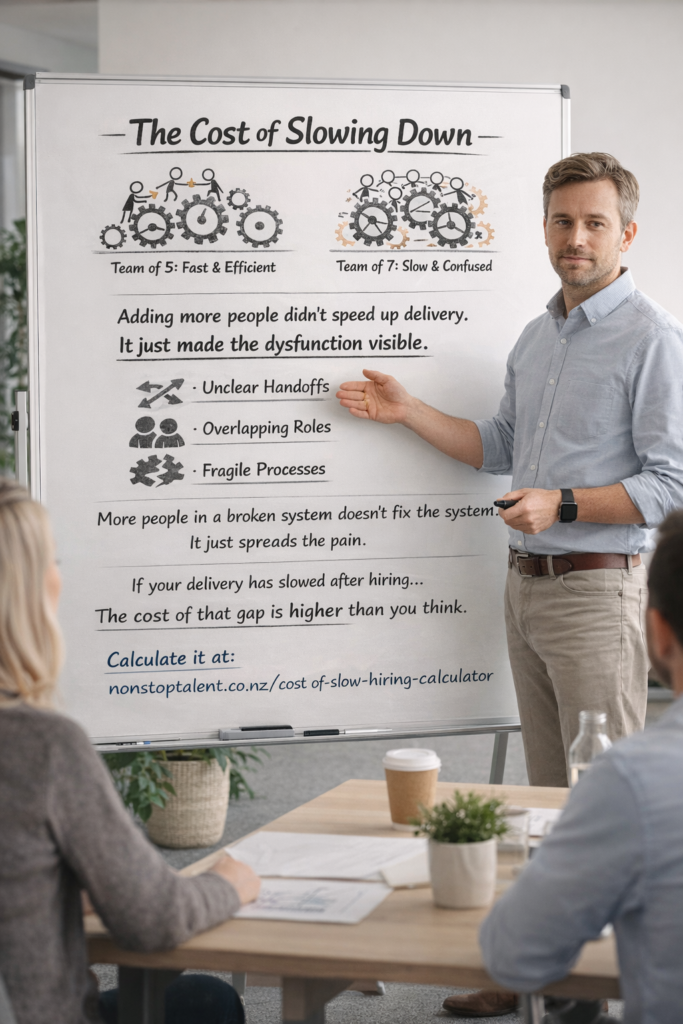
Two new engineers on the team.
Both good.
Standups got longer. Slack channels multiplied. The sprint that was supposed to take two weeks took four.
The CTO I spoke to wasn’t sure what to do with that. He’d fought for the headcount. Finance had finally said yes. He’d hired well, both people had strong backgrounds, references checked out, team liked them.
But somehow the team was slower than before they joined.
He thought it was onboarding drag. Maybe a culture fit issue. Maybe the new engineers weren’t as strong as they seemed in the interview.
It wasn’t any of that.
The delivery system was built for five people. He put seven in it. Nobody redesigned the handoffs. Nobody clarified who owned what. Deployment confidence was already shaky, now there were two more people touching the same fragile parts of the codebase.
The new engineers weren’t slowing the team down.
The team’s operating model was slowing the team down. The two new people just made it visible.
More people in a broken system don’t fix the system. It just distributes the dysfunction more evenly.
If you’ve added headcount in the last six months and delivery hasn’t moved the way you expected, the cost of that gap is probably higher than you’ve priced it.
nonstoptalent.co.nz/cost-of-slow-hiring-calculator